
Granny Boss
KetchappArcade
4.5194.00 Reviews
- Version
- 4.3.7
- Installs
- 10.00K
- Age Rating
- Everyone
Screenshots

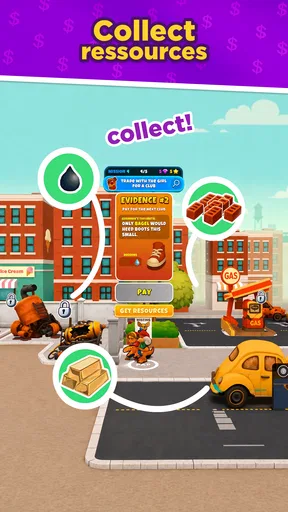
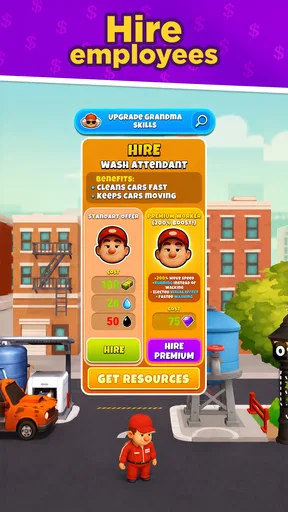


Our Review of Granny Boss
 Analysis by Appyee
I went into Granny Boss expecting a quick arcade distraction, and that is exactly where it makes the most sense. This is a free game from Ketchapp that mixes street-cleaning tasks, collecting loot, and gradually building a hotel business into one compact loop. The idea is easy to understand within moments: tidy up, gather value, reinvest, and keep expanding your little empire. It is aimed at Everyone, so the presentation is accessible rather than intense or complicated.
What makes the game worth a look is the contrast between its simple controls and its longer-term progression. A short session can feel satisfying because there is usually a visible task in front of me, while a longer session gives me reasons to think about what to improve next. It is not a deep management simulator, and I would not choose it for detailed hotel planning. I would choose it when I want a light arcade game with a business-building theme and very little learning curve.
How the street-to-hotel loop feels in practice
The central appeal is the movement from cleaning streets to collecting loot and then turning those gains into a growing hotel project. That structure gives each action a purpose. I am not simply clearing an area for the sake of a score; I am working toward a larger business. The connection between the immediate arcade activity and the wider hotel goal is what gives the game more direction than a purely repetitive tap-and-move experience.
That said, the game remains firmly in the arcade category. The emphasis is on quick reactions, straightforward objectives, and frequent progress rather than on spreadsheets, staffing plans, room layouts, or complex economic decisions. Players looking for a serious tycoon simulation should keep their expectations in check. The hotel theme adds motivation, but it does not turn the experience into a full management sandbox.
I found the format particularly suitable for small gaps in the day. A commute, a waiting room, or a short break is enough time to make visible progress without needing to remember a complicated chain of systems. The accessible age rating also fits that casual presentation. There is no need to study a manual before starting, and the basic fantasy is immediately readable: clean up, collect, build, repeat.
Why the first few sessions are easy to enjoy
The early appeal comes from clear feedback. When an arcade action leads to more loot or a new improvement, the game communicates that the effort mattered. This is important in a genre where repetition can otherwise feel empty. The hotel objective acts as a simple mental reward: I can connect a small street-level action with the idea of a larger property becoming more successful.
My practical advice is to avoid rushing through every available improvement. It is more useful to pause briefly and decide whether the next purchase will make the current activity smoother or merely provide a short visual step forward. In a game built around repeated reinvestment, that small habit helps me notice which upgrades actually change the rhythm of play and which ones mainly serve as milestones.
Another useful approach is to treat each session as a self-contained run rather than feeling obliged to finish a large stretch of progress. The design is better suited to repeated visits than to one long uninterrupted campaign. If I have only a few minutes, I can complete a small objective and leave. If I have more time, I can continue pushing the hotel forward. That flexibility is one of its strongest everyday qualities.
Progression brings motivation, but also repetition
The same loop that makes the game approachable can eventually become its main limitation. Cleaning, collecting, and investing are satisfying when a new milestone is close, but the actions can feel familiar once the novelty fades. This is not necessarily a flaw for a casual arcade title; repetition is part of the format. Still, anyone who needs constant mechanical variety may find the routine too narrow after the initial curiosity has passed.
I would describe the pressure as gentle rather than dramatic. The game encourages me to keep improving the hotel, but it does not present itself as a demanding strategy challenge. That makes it comfortable for relaxed play, although it also means that players searching for difficult decisions may feel under-served. The most meaningful choice is usually how to direct progress, not how to solve a complicated economic puzzle.
A good way to manage that feeling is to set a small personal target before starting. I might decide to focus on reaching the next hotel improvement, clearing a particular area, or simply making one efficient reinvestment. Without a target, the loop can blur into background activity. With one, the same actions feel more deliberate and the session has a clearer ending point.
Spending, fairness, and what I would watch before buying
The game is free to start, but it includes optional in-app purchases priced from $0.99 to $49.99 per item. That range matters because the experience should be judged not only by whether the opening is accessible, but also by how comfortable a player feels continuing without spending. I would approach it as a free arcade game first and treat purchases as optional extras rather than as part of the basic admission price.
For a child or anyone using a shared device, I would set a clear spending rule before handing over the phone. The Everyone rating describes the intended age accessibility, but it does not remove the need for ordinary purchase awareness. A free download can still lead to paid choices, so I would make sure the player understands that the game contains purchasable items and that the larger item price deserves particular care.
From a fairness perspective, I would pay attention to whether progress remains enjoyable when I ignore the shop. The important test for me is simple: can I keep playing the cleaning, loot, and hotel-building loop without feeling that every meaningful step is blocked? If the answer is yes, the purchases can remain a convenience for people who want to accelerate or support the game. If progress starts feeling designed mainly to push spending, the free entry becomes less attractive.
I would not make a stronger claim than that without observing the purchase flow over a longer period. The listed purchase range confirms that paid items exist, but it does not by itself establish how necessary they are, how frequently they appear, or whether they affect competitive outcomes. That distinction is important. A purchase option can be harmless in a solo arcade experience, while the same pressure would be much more troubling in a leaderboard-focused game.
Is it competitive, and does spending decide the result?
I would not treat Granny Boss as a competitive fairness product based on its basic premise. The focus is personal progression through street activity and hotel growth, not a clearly defined player-versus-player contest. That makes spending less concerning than it would be in a game where paid advantages directly determine matches. Even so, players who compare themselves with others should be cautious about assuming that every visible result represents the same path or the same amount of effort.
My own standard would be to enjoy it as a private progression game. I can choose an improvement, watch the business theme develop, and stop when the session has done its job. That removes much of the pressure to optimize against other people. If a player mainly wants equal conditions, transparent rankings, or a tightly balanced competitive environment, this is probably not the right arcade choice.
There is also a practical trade-off between convenience and satisfaction. Paying may feel useful to someone who has very little time and wants to move through progress more quickly. For me, the gradual growth is part of the reason to play, so skipping too much would risk removing the reward. I would only consider spending after deciding that the core loop already feels enjoyable without it; buying into a game I do not enjoy slowly rarely fixes the underlying problem.
Questions I would answer before installing
One obvious question is whether the game is suitable for a quick, casual player. In my view, yes. The arcade structure and clear street-to-hotel objective make it easy to enter without a large time commitment. It is a better fit for short recurring sessions than for someone who wants a long, uninterrupted adventure with a detailed story.
Another question is whether it is appropriate for younger players. Its content rating is Everyone, which matches the simple, broadly accessible concept. I would still supervise spending on a family device because the game contains optional purchases. The age rating and the payment situation answer different questions: one concerns content, while the other concerns household control.
Players also often want to know whether they need to pay to begin. They do not: the game is free. However, free entry should not be confused with a completely purchase-free experience. The presence of items ranging from $0.99 to $49.99 means I would review the purchase settings and decide in advance whether spending is allowed.
Device compatibility is another practical point. The listed minimum operating system is Android 7.0, so I would check that an older phone meets that requirement before expecting a smooth installation. The current version is 4.3.7, which is useful when checking whether my installed copy is up to date or when troubleshooting a difference between devices.
Finally, I would ask whether the game has enough depth for a dedicated tycoon fan. My answer is probably no if the player wants detailed hotel economics, layered management, or a large number of strategic systems. The hotel empire is the motivating frame around an arcade loop. That is a strength for accessibility, but a limitation for simulation enthusiasts.
How it compares with other casual arcade choices
Compared with a score-chasing arcade game, this one gives me a more persistent reason to return. A traditional arcade title may focus almost entirely on beating a previous result, while Granny Boss ties repeated actions to the visible idea of a growing hotel. That makes it more goal-oriented for players who like upgrades and accumulation rather than endless attempts at a high score.
Compared with a full tycoon game, it is much lighter. I am not expected to manage every part of a hotel operation or balance a complicated set of business variables. The trade-off is obvious: I get faster access and less mental overhead, but I also receive fewer meaningful management decisions. I would pick this game for a relaxed arcade session and a deeper simulator when planning itself is the main entertainment.
It also differs from games that rely on a strong narrative hook. The appeal here is the activity and the progression loop, not a story I need to follow closely. That can be refreshing when I want to play with sound off or while taking a short break. On the other hand, players who need characters, plot twists, or a strong emotional reason to continue may find the hotel-building goal too simple.
A non-obvious benefit of this lighter design is that it is easier to resume after several days away. I do not need to reconstruct a complicated plot or remember a long sequence of objectives. I can return to the current cleaning and investment goal and understand what to do. The cost is that the game may not create the same urgency or attachment as a more elaborate alternative.
What remains important to judge over time
The public figures give a useful snapshot of reception: the game carries a 4.5 average from around 835 ratings, with around 194 written reviews and over 10K installs. Those numbers suggest that it has attracted a real early audience, but they should not replace personal testing. A casual arcade game can suit many players while still becoming repetitive for someone with different expectations.
I would especially watch how the progression feels after the first few sessions. Early rewards can make almost any loop feel lively, so the better question is whether the street work remains pleasant once the novelty of the hotel theme settles. I would also note how often the game draws attention to paid items and whether I can maintain a satisfying rhythm without using them.
Another point I would assess is the balance between visible growth and meaningful change. If each improvement merely increases a number or changes the appearance without affecting how I play, the tycoon layer may feel decorative. If improvements make my route, collection choices, or session goals more engaging, then the hotel framework earns its place. That is the distinction I would use when deciding whether to keep it installed.
I would not promise a particular experience for every device or every player. The game is a current release dated Mar 27, 2026, and its version is 4.3.7, so future updates may alter the feel of progression or the presentation. For now, the sensible approach is to judge it as a compact arcade builder rather than expecting a finished replacement for a large management game.
My trust verdict
After looking at the complete proposition, I see Granny Boss as a pleasant option for players who enjoy simple collection loops with a visible business goal. The street-cleaning theme gives the opening action a little personality, while the hotel objective prevents the game from feeling like a disconnected series of tasks. I like that I can play in short bursts and still feel that the session moved something forward.
The reservations are just as clear. The loop may become repetitive, the hotel layer should not be mistaken for a detailed simulator, and the in-app purchase range means families should establish spending boundaries. I would also avoid treating it as a serious competitive game, since its strongest appeal is personal progression rather than carefully balanced rivalry.
My recommendation is to try it as a free, low-commitment arcade game, not as a deep tycoon or a guaranteed purchase-free experience. If you enjoy cleaning up a space, collecting rewards, and watching a small business concept grow, it has a clear reason to stay on your phone. If you need demanding strategy, constant novelty, or strict competitive equality, another category of game will serve you better.
For me, the deciding factor is whether the basic loop remains satisfying without paying. Start there, set a personal progress goal, and resist spending until the ordinary play already feels worthwhile. That approach keeps the game’s strengths—the quick arcade rhythm and the hotel-building motivation—visible while making its limitations much easier to judge honestly.
Verdict
Strengths of Granny Boss
- Simple controls make the game easy to pick up quickly.
- Short levels work well for quick gaming sessions.
- The cartoon-style visuals are colorful and easy to recognize.
- Increasing challenges provide a steady sense of progression.
- Offline play is convenient when no internet connection is available.
Limitations of Granny Boss
- Repetitive objectives may reduce long-term variety.
- Frequent ads can interrupt gameplay between levels.
- Some upgrades may require considerable grinding to unlock.
- The difficulty can feel uneven in later stages.
- Performance may vary on older Android or iOS devices.
Other Releases by Ketchapp
View All
Rider – Stunt Bike Racing
Arcade4.3

Knife Hit
Arcade4.2

Monster Chase
Arcade4.5

Horse Life: Foal & Ranch Care
Arcade4.7
Similar Picks in This Category
View All
Subway Surfers
SYBO Games4.6

Stickman Party 234 MiniGames
PlayMax Game Studio4.6

Subway Princess Runner
Ivy4.4

Temple Run
Imangi Studios4.2

Zombie Tsunami
Mobigame SAS4.6

Stack Ball - Crash Platforms
CASUAL AZUR GAMES4.5
Frequently Asked Questions
What is Granny Boss and how does the game work?
Granny Boss is an action-focused mobile game built around challenging encounters with a powerful granny-themed boss character. Players typically need to move carefully, avoid attacks, learn enemy patterns, and use available weapons or abilities at the right moment. The experience combines combat, quick reactions, and progression, making each attempt feel more manageable as you understand the boss’s behavior.
Is Granny Boss free to download and play?
Granny Boss can generally be downloaded without an upfront purchase, although the exact monetization system may depend on the Android or iOS version available in your region. Some editions may include advertising, optional purchases, or paid upgrades. Before installing, it is worth checking the store listing for details about in-app purchases, advertisements, required permissions, and whether any features are restricted behind payment.
Is Granny Boss suitable for children?
The game’s suitability depends on the specific version and the player’s age. Because Granny Boss focuses on boss battles, danger, and potentially frightening or cartoon-style imagery, younger children may find some scenes intense. Parents should review the age rating, screenshots, privacy information, and in-app purchase settings before allowing a child to play, especially if the device is linked to a payment method.
Does Granny Boss require an internet connection?
Whether an internet connection is required can vary between versions and updates. Core gameplay may work offline if the game stores its levels and progress locally, but advertisements, cloud saves, leaderboards, updates, or certain online features may need mobile data or Wi-Fi. We recommend launching the game once while connected, then testing airplane mode to confirm which functions remain available.
What should I check before downloading Granny Boss?
Before downloading Granny Boss, check that your device meets the developer’s operating-system and hardware requirements, since older phones may experience slow performance or crashes. Also review the app size, recent user feedback, privacy policy, permissions, age rating, and update history. Confirm that the title is published by the legitimate developer, as similarly named games or unofficial copies may not be trustworthy.
Play our best games!


